How To Use JEE Mains PYQ Chapterwise For Maximum Score
Hey JEE fighter, getting ready for the highest score in Mains 2026 Session 2! As we already know, Session 1 completed and now the Session 2 is on its way rapidly. You are faced with 90 minutes of hard multiple-choice questions, tricky number problems and the part where you get to leave some answers blank. We have all felt our heart pounding while we write fast!
But here comes the good news: You don’t have to be very clever or study all night. The trick is to practice old exam questions chapter wise. These are a map to what will be there. Old exam questions of previous years clearly show what the exam makers like to ask. Bothered with problems about motion or electricity? Go through old questions from that chapter of all the last 20 years. You will see the same patterns repeatedly. No more guessing! Most students just do full tests like watching TV shows back-to-back. They get stuck. Clever students divide the work: one chapter at a time. One day you solve it untimed to learn. Then you solve it timed to be fast.
This blog will explain how, based on school books (NCERT) as the foundation, the best ones for JEE Mains. We will talk about a secret resource for the PYQ practice. Plus, why practice tests for JEE Advanced matter a lot.
The Importance Of PYQs As Your Score Multiplier
Now imagine JEE Mains as a battlefield where patterns repeat, high-weightage chapters exist, and there is no time left. Solving PYQs chapterwise can be likened to surgery to cure your weak spots. It also shows which topics (Phys: Mechanics, Chem: Organic etc.) give maximum questions and hence help you master them like a pro.
Staring at PYQs without direction can lead to stagnation, but mastering them chapterwise helps you gain speed, accuracy, and you can even get that feeling of "I have seen this before" when you encounter a trick. You can master time-management for 180-minutes exams and also predict question types. 10-15 PYQs per chapter solved by toppers. The reason behind creating 99+ percentile from an average score.
NCERT: The Hero For JEE Domination
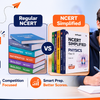
Before PYQs, ace JEE foundation with NCERT books, they aren’t schoolbooks, they are NTA’s bible. A massive quantity of questions, especially in Chemistry, are directly from NCERT lines, diagrams and tables. Physics and Maths are conceptually clear, so Advanced problems are not so scary.
The best NCERT books for JEE Mains are the official Class 11 & 12 books in Physics, Chemistry and Mathematics. They are crisp, accurate and syllabus aligned with zero fluff. Start every chapter here: read actively, underline key points, solve in-text examples. Memorize reactions verbatim in Chemistry; derive formulas yourself in Physics. This base gives you 70-80% direct hits in Mains.
Pro tip: Start PYQs right after scratching off a chapter, after finishing NCERT. You’ll realize how NTA turns NCERT concepts into MCQs, and how motivation soar!
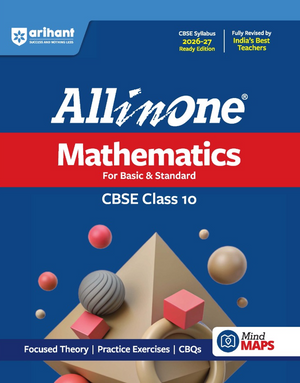
Spotlight: Arihant Master The NCERT JEE
Check Arihant Master the NCERT JEE, the bridge that takes you from NCERT reading to PYQ power. The books (Physics, Chemistry, Maths in Class 11 & 12 volumes) break every NCERT line, paragraph, figure into 2000+ MCQs, assertions and case-based questions for JEE. What are their strengths? Topic-wise summaries, special format questions similar to JEE pattern, progressive difficulty, easy NCERT based to JEE level twists. Reviews say: "Every penny spends for depth and practice; best for building speed without reading another book." Read it after NCERT: solve chapterwise, note mistakes and revise.
Combine like this: NCERT theory → Arihant Master the NCERT PYQs. Boom, unbeatable combo for 250+ scores.
Step By Step To Crack JEE Mains Pyqs Chapterwise
So, you are ready to take it higher? Here is the no-nonsense approach to cracking JEE Mains PYQs chapterwise. Get a book which has PYQ compilations (last 10-20 years) (+ solved questions).
Step 1: Gear up
Complete NCERT to master the chapters. Write down the formulas, concepts, weightage (e.g. Electrostatics: 10-12% questions). Get PYQs: 2000-3000 per subject, chapter-wise.
Step 2: Initial attack – no time limit
Solve all the PYQs from a chapter at once. NO solutions! Target 80% accuracy. Stuck? Mark with asterisk (*). This will expose your blind spots. For example, did you know that there’s a vector trick in MECH? Time: 2-3 hours/chapter.
Step 3: Observer 3.0
Score yourself. For wrongs, go back to NCERT or Arihant Master the NCERT for JEE latest edition and analyse the type of error (conceptual gap? Calculation error?). Turn it into a “mistake notebook”: formula missed, trick missed. If it’s a high weightage chapter, repeat again and again.
Step 4: Timed blitz + revision
Re-solve the entire set a week later (timed: 1 min/question). Target 95%+. Revise notes weekly. Alternate days: mix 20-25 questions across subjects for stamina. Track progress in Excel, watch scores rise! Step 5: Full integration Post-syllabus: PYQ mocks (full papers). Daily: 50+ questions (10-15 PYQs/chapter).
Monthly: revise low-score chapters. This routine will direct to 99iler club.
Common Errors (And How To Avoid Them) During JEE Main Preparation
Mistake: Jumping randomly thro’ the years.
Correct: post-theory chapterwise always.
Mistake: Skipping analysis.
Correct: devote same time reviewing.
Mistake: Skipping low-weight chapters.
Correct: scan PYQs quick for surprises.
Your 30-Day Plan For JEE Main 2026 Session 2
Days 1-10: 3 chapters/day (NCERT → Arihant Master the NCERT PYQs)
Days 11-20: Revision + timed PYQs, 1 mock/week
Days 21-30: 2 mocks/day, PYQ marathon on weak areas.
You are not studying, you are planning like a sales entrepreneur. Stick this, and JEE Mains 99+ is yours.