Which Is The Best Handbook For JEE? Top Choices For Physics, Chemistry & Maths
Introduction
As you begin your path toward your JEE journey, you don't need to re-read thousands of pages; you need the right ten pages that actually matter. A great handbook acts like a shortcut, shrinking a massive syllabus into a simple, clear path forward. It helps you stop guessing and gives you the confidence to say, "I truly understand this." By focusing only on the most important formulas and shortcuts, you save your time and stop yourself from feeling overwhelmed.
Choosing the right guide is the best way to boost your speed and stay calm when the pressure builds up.
|
Table of Contents |
|
1. Introduction |
2. What is a Handbook for JEE and Why Every Aspirant Needs One? |
3. How to Effectively Use a Handbook for JEE in Daily Practice |
4. How to Choose the Best Handbook for JEE Preparation? |
5. Common Mistakes Students Make While Using JEE Handbooks |
|
6. Conclusion |
|
7. FAQs |
What Is A Handbook For JEE And Why Every Aspirant Needs One?
A JEE handbook is a small, handy book that summarises your entire syllabus into simple formulas, definitions, and important notes. Instead of carrying heavy textbooks, you can use it as a quick guide to refresh your memory during the final months of revision.
Its portable design makes it easy to study anywhere, helping you focus on the actual points that appear in the exam rather than long, confusing explanations. It essentially saves you time by putting all the vital information you need in one easy-to-reach place.
How To Effectively Use A Handbook For JEE In Daily Practice
Owning a handbook is only half the battle; the real advantage comes from how you integrate it into your study routine. It should never replace your main textbooks but should instead complement your problem-solving sessions.
|
1. Review After Study: |
Open the handbook immediately after reading a chapter to view the key points. |
|
2. Quick Help: |
Have it close by when solving problems so you can check formulas or chemical reactions in a few seconds. |
|
3. Correct Errors: |
Once you have taken a practice test, look up any formulas you have forgotten to help you remember them better. |
|
4. Revision at night: |
Spend 20-30 minutes every night skimming a few pages to ensure that the topics are still fresh in your mind. |
|
5. Underline Hard Parts: |
Circle the most challenging formulas to enable you to locate and practice them later on without difficulties. |
How To Choose The Best Handbook For JEE Preparation?
Not all handbooks are created equal, and choosing the wrong one can lead to confusion or missing out on updated exam patterns.
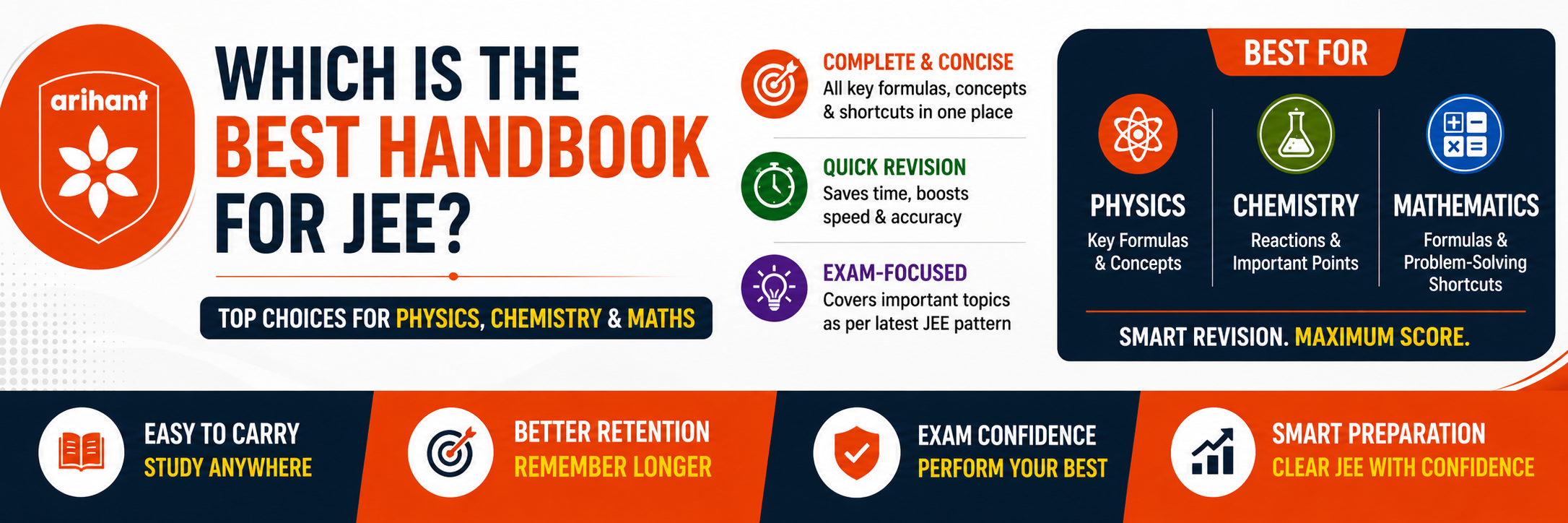
A good handbook should feel like a summary of your own notes, only more professionally organised, like Arihant’s handbook for JEE, designed for Physics, Chemistry, and Mathematics across Class 11, Class 12, and JEE levels, is considered one of India’s leading multipurpose quick revision books. It follows a well-structured approach with its “Fantastic 4” features that include Value Points, Competition Insights, Knowledge Booster, and Knowledge Library, ensuring focused and effective revision. The content is crisp, relevant, and strictly to the point, without any unnecessary or overwhelming information, which makes it highly suitable for last-minute preparation.
Its compact and portable design allows students to carry it easily and revise formulas and key concepts anytime, helping them retain information better and perform with greater confidence in the exam.
Common Mistakes Students Make While Using JEE Handbooks
Many aspirants treat handbooks incorrectly, which can lead to a shallow understanding of the subject matter.
Avoiding These Common Traps Will Help You Maintain A Competitive Edge.
1. Learning rather than Revising: A handbook should not be used to learn new things. Read it when you have a few minutes to go through it.
2. Replacing Main Books: Do not substitute your textbooks with a handbook, or you will not be able to see why the formulas have been made.
3. No Personal Notes: Compose your own shortcuts in the margins so that you can make the book more practical.
4. Using Basic Books: Avoid general books. Use one made specifically for the JEE level.
5. Reading Without Solving: Just reading formulas won't help. To be prepared, you must practice problems.
Conclusion
Preparing for JEE is tough, but a good handbook makes it manageable by organising everything into one simple place. Choosing a trusted guide like the Arihant Handbook series means you’re focusing on exactly what matters most for the exam. Its unique "Fantastic 4" features help you boost your knowledge quickly without getting lost in long chapters.
It’s your perfect partner for last-minute study, helping you feel calm, prepared, and ready for your best performance.
FAQs
Q1. Which Is The Best Handbook For JEE Overall?
Ans. The Arihant Handbook is widely considered the best choice for JEE aspirants. It is India’s number one multipurpose quick revision book, perfectly designed for Class 11, 12, and JEE students across Physics, Chemistry, and Mathematics. What makes it stand out are its "Fantastic 4" features and compact size, which allow for sharp, focused, and highly effective last-minute preparation.
Q2. Is A Handbook For JEE Enough For Preparation?
Ans. A handbook is a support tool. While a handbook for JEE is excellent for revision, it should always be used alongside standard textbooks and practice problems.
Q3. Is A Chemistry Handbook Useful For Reactions?
Ans. Yes, it is very helpful. It puts all the important chemical reactions and formulas in one place, so you don’t have to hunt through hundreds of pages of notes.
Q4. Should I Buy Separate Books For Each Subject?
Ans. Having a dedicated Physics handbook for JEE or separate books for Maths and Chemistry is often better. It allows for more detail and makes it easier to focus on one subject at a time.