UPSC Syllabus Is Large, Your Notes Shouldn't Be: How To Master GS With Mind Maps
Introduction
Preparing for UPSC often feels like you’re trying to study every possible topic out there. The syllabus is so large that many students end up stuck between big textbooks and too many PDFs. But the real secret to clearing the IAS exam is not how much you read, it’s how much you can remember and use in the exam hall.
If you’ve ever read a long 50-page chapter and then realized you forgot the beginning by the time you finished, that’s completely normal. The real advantage comes when you stop forcing your brain to learn in a boring way and start using methods that make ideas easy to understand and remember. In this guide, we’ll look at how to go beyond simple reading and learn through visual and active revision methods.
Table of Contents |
|
1. Introduction |
2. The Revision Trap: Why Traditional Methods Often Fail |
3. The Science of Recall: Master the Syllabus with UPSC Mind maps |
4. Choosing your Prep Book: How to Evaluate Test Prep Material |
|
5. Conclusion |
|
6. FAQs |
The Revision Trap: Why Traditional Methods Often Fail
Many serious aspirants wrongly think revision just means reading the same pages again. They end up highlighting almost everything in the book, but still find it hard to link ideas and answer questions properly in mock tests.
Common Pitfalls Include:
· Paragraph Overload: Relying purely on dense text makes last-mile revision nearly impossible.
· Linear Thinking: Treating subjects like History, Science, and Polity as separate silos instead of an interconnected system.
· Passive Review: Reading the same notes over and over rather than using active recall triggers.
· The One-and-Done Approach: Doing a single, long revision instead of multiple, rapid cycles that keep information fresh.
To truly succeed, you need to transition from "marking everything" to "memorizing the essentials" through a more structured, visual approach.
The Science Of Recall: Master The Syllabus With UPSC Mind Maps
Your brain understands pictures much faster than long blocks of text. That’s why mind maps can make a big difference in your preparation. Instead of keeping a 20-page chapter in paragraph form, you turn it into one clear, simple page with main keywords and connected ideas. These visual links act like memory triggers, helping your brain quickly remember and connect concepts during the exam.
How To Optimize Your Preparation:
|
Cluster Your Learning |
Study topics in linked clusters to see the "big picture". |
|
Compress & Connect |
Use layered UPSC mind maps to turn complex chapters into one-page recall sheets. |
|
Rapid Revision Cycles |
Prioritize quick, multi-revision cycles using visual formats rather than re-reading long notes. |
|
The Linkage Method |
Use visual revision frames to bridge the gap between static concepts and dynamic current affairs. |
Choosing Your Prep Book: How To Evaluate Test Prep Material
The best study resources prioritize visual intelligence over dense text to ensure that high-stakes preparation remains both efficient and mentally manageable.
· Visual Pathways & Mind Maps: Look for logical link chains that connect cross-subject concepts, allowing you to see the big picture at a single glance.
· Rapid Revision Layouts: Opt for materials designed with infographic-style summaries and flow-based layouts that support multiple revision cycles without the need to re-read entire chapters.
· Memory Triggers: Choose books that use layered visual frameworks to build faster recall and strengthen long-term retention through spatial association rather than rote memorization.
· Cognitive Efficiency: Prioritize scannable content that replaces long blocks of text with clear visual pathways, reducing cognitive load and accelerating your learning pace.
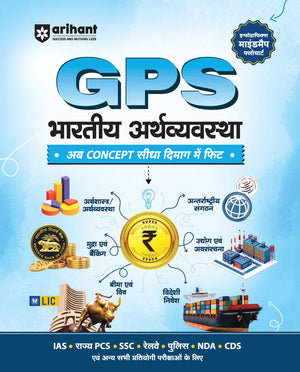
When the syllabus feels like a wilderness, you need a guide that shows you the direction, priority, and linkage across subjects. The GPS Book series (Graphical Prep Series) by Arihant Publications is specifically designed to act as that navigator.
Whether you are looking for a Mind Map Book for UPSC or a specialized resource for General Science and Polity, the GPS series replaces long text blocks with clear visual pathways.
Why The GPS Series Is The Ultimate Mind Maps For UPSC Exam Preparation Tool:
· Visual Strategy: Uses infographics, flowcharts, and mind maps to ensure concepts "click" in one glance.
· Layered Frameworks: Designed around UPSC Mind Maps for IAS level preparation, helping in faster scanning and reliable recall.
· Memory-Boost Formula: Tough topics stay fixed in your memory through scientific learning triggers and catchy visual lines.
· Revision Intensive: Supports rapid multi-revision cycles without the need to re-read full chapters.
Conclusion
Mastering the UPSC Civil Services exam requires a shift from being a "reader" to being a "strategist." By integrating Mind Maps for UPSC Exam Preparation into your daily routine, you turn information overload into organized recall. The GPS (Graphical Prep Series) by Arihant Publications provides that essential visual framework, ensuring that every concept is not just read, but seedha dimag me fit.
FAQs:
Q: Is Reading More Books The Key To Clearing The IAS Exam?
A: Not really. Success depends less on how much you read and more on how well you understand, remember, and apply concepts in the exam. Smart revision beats excessive reading.
Q: What Are Visual Learning Methods In UPSC Preparation?
A: Visual learning includes tools like mind maps, flowcharts, diagrams, timelines, and infographics that help convert complex topics into easy-to-remember visuals.
Q: How Can I Use UPSC Mind Maps For IAS Level Preparation Effectively?
A: Use them to compress chapters. Instead of re-reading, scan the mind map to trigger your memory. This allows for multiple revision cycles in the time it would take to read a single chapter once.
Q: Is The GPS Series Suitable For Absolute Beginners Or Only For Advanced Revision?
A: It serves both. While advanced aspirants use it for rapid revision cycles, beginners find it helpful for Quick Understanding as the visual pathways make complex concepts click in one glance.