Balancing The Scales: How To Master UPSC Prelims General Studies Paper 1 And Paper 2 Simultaneously

Introduction
The process of preparing towards the UPSC prelims is not an easy one since the aspirants have two papers to attend to. The exams are called General Studies Paper 1 and are designed to test the subjects such as history, polity, geography, economy, and environment, whereas the exam called General Studies Paper 2 (CSAT) is used to test the understanding, reasoning and basic mathematics.
Some aspirants do not pay much attention to CSAT and concentrate on GS Paper 1, which is not very safe. Although it is qualifying, it is important to pass the UPSC Prelims General Studies Paper 2. In the case of UPSC IAS Preliminaries (2026), having a balanced plan and study aids such as UPSC Prelims Quick Revision Notes and UPSC Prelims Mind maps can simplify the process and reduce the time taken.
|
Table of Contents |
|
1. Introduction |
2. Introduction to the strategy for balancing UPSC Prelims General Studies Paper 1 and Paper 2 |
3. Creating a smart preparation plan for UPSC IAS Prelims 2026 |
4. Best book for UPSC prelims 2026 preparation |
5. Common mistakes aspirants make while preparing for both the prelims papers |
|
6. Conclusion |
|
7. FAQs |
Introduction to the strategy for balancing UPSC Prelims General Studies Paper 1 and Paper 2
The trick of writing two papers simultaneously requires a straightforward and moderate plan.
1. Divide your study time
Do not read just one paper during the entire day. Share your time between the two papers.
Example:
1. Morning: UPSC Prelims general studies paper 1 study subjects.
2. Afternoon: Revise with UPSC Prelims Quick Revision Notes.
3. Evening: UPSC Prelims Paper 2 Practice questions.
2. Consider concepts and practice.
1. In the case of UPSC Prelims General Studies Paper 1, concentration should be on concepts.
2. In the case of Prelims General Studies Paper 2 in the UPSC, practice is important.
3. Use visual learning: UPSC Prelims Mind maps will make you learn and retain the topics in the shortest time possible. They are extremely useful in revision.
4. Revision of past year questions.
Answering questions from the previous year will give you an idea of the way the exam will be.
Creating A Smart Preparation Plan For UPSC IAS Prelims 2026
A good study plan makes you focused and organised.
1. Establish good foundations: Begin with fundamental books and work on key areas of UPSC Prelims General Studies Paper 1, like polity, history, geography, economy, environment, science and technology.
2. Practice CSAT regularly: Although the paper 2 of the UPSC Prelims is qualifying, it must not be overlooked. Drills: understanding, logic, and simple mathematics.
3. It is possible to increase your speed and accuracy even with 30 minutes of practice a day.
4. Revise with quick notes: Long books are not easy to revise before the exam. UPSC Prelims Quick Revision Notes assist you in revising on vital topics in a quick manner.
5. Quick revision on mind maps: The mind maps that are prepared at UPSC Prelims enable you to cover the topics quickly and retain information readily.
6. Take mock tests: Mock tests are beneficial as they will assist you in knowing the level of your preparation and better time management.
Best book for UPSC prelims 2026 preparation
For focused preparation, Students should choose the book with these features for their preparation, as it provides structured practice, exam-level mock tests, and focused revision support for UPSC IAS Prelims 2026.
1. Includes sectional, topical, and full-length practice tests.
2. Covers important and trending topics with quick revision support.
3. Focuses on conceptual clarity, accuracy, and speed.
4. Provides exam-like mock practice for real-time preparation.
5. Provides mind maps and cheat sheets for quick and effective revision.
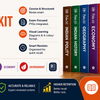
For serious preparation of UPSC IAS Prelims 2026, aspirants need a reliable and structured resource. UPSC IAS (Pre) 2026 – Prelims Abhyaas 2.0 (General Studies Paper I) and UPSC IAS (Pre) 2026 – Prelims Abhyaas 2.0 (CSAT Paper II) together offer tests, sectional and topical tests, full-length mock tests, an All India mock test, and a cheatsheet and mind maps for quick revision support.
With this complete combo, students do not need to buy multiple books from the market. Available in both Hindi and English, it ensures smooth preparation for both mediums and stands as one of the most dependable choices for prelims success.
Common Mistakes Aspirants Make While Preparing For Both The Prelims Papers
Many aspirants make small mistakes that affect their performance.
· Not taking CSAT: certain aspirants do not give attention to UPSC Prelims General Studies Paper 2, and this may fail the exam.
· Too many resources: When reading too many books, it becomes confusing. Use only trusted and a few books.
· Failing to practice MCQs: UPSC prelims: This exam is based on MCQs. It has to be practised regularly.
· Revision skip: It becomes hard to remember topics without revision. Revise using UPSC Prelims Quick Revision Notes.
· Poor time management: The lack of time in balancing between the time spent on the UPSC Prelims General Studies Paper 1 and the time spent on the UPSC Prelims Paper 2 may cause issues in preparation.
Conclusion
Cracking the UPSC IAS Prelims 2026 is a matter of discipline and choosing the right tools. By combining a solid study plan with the structured tests in Abhyaas 2.0, you ensure that both UPSC Prelims General Studies Paper 1 and Paper 2 are well within your reach. Focus on the mind maps, trust your revision notes, and keep Practising.
FAQs
Q1. How Many Mock Tests Should I Attempt Before UPSC IAS Prelims 2026?
Ans. Attempt at least 8–10 full-length tests for both UPSC Prelims General Studies Paper 1 and UPSC Prelims Paper 2.
Q2. Which Books Are Best For UPSC?
Ans. Best book for UPSC Prelims 2026 by Arihant Publications, aspirants need a reliable and structured resource. UPSC IAS (Pre) 2026 Prelims Abhyaas 2.0 (General Studies Paper I) and UPSC IAS (Pre) 2026 – Prelims Abhyaas 2.0 (CSAT Paper II) together offer tests, sectional and topical tests, full-length mock tests, an All India mock test, and a cheatsheet and mind maps for quick revision support.
Q3. Can I Crack IAS By Self-Study?
Ans. Yes, you can absolutely crack the IAS exam through self-study, as many successful toppers have proven, but it requires immense discipline, a strategic plan, and quality study materials, using online resources, past papers, and test series for guidance instead of formal coaching.
Q4. Is It Tough To Crack IAS?
Ans. IAS is beyond doubt one of the toughest exams in India owing to its vast syllabus and competition. However, it is achievable with diligent preparation, a strategically planned approach, and perseverance.