CTET Strategy for Beginners: Step-by-Step Guide
Introduction
The dream of becoming a teacher in a prestigious government school is a noble one, but the path it requires is more than just hard work; it requires a strategy that is as solid as your determination. The CTET exam is scheduled for 8 February 2026, and as the date approaches, it is natural for many first-time aspirants to feel a wave of anxiety. You might be struggling with a vast syllabus, the confusion of which subjects to priorities, or the fear of not finishing in time.
This blog is your roadmap, covering everything from the exam pattern and beginner mistakes to the best book for the CTET exam selection, ensuring you walk into that exam center with confidence.
|
Table of Contents |
|
1. Introduction |
2. Understanding the CTET Exam Pattern & Marking Scheme (For First-Time Aspirants) |
3. Common Mistakes Beginners Make in CTET Preparation |
4. Importance of Choosing the Right CTET Books |
5. What Makes a Book the Best Book for CTET Exam? |
6. Final Preparation Tips Before the CTET Exam |
|
7. Conclusion |
|
8. FAQs |
Understanding The CTET Exam Pattern & Marking Scheme (For First-Time Aspirants)
Understanding the exam pattern and marking scheme is crucial for efficient preparation. Here is a quick breakdown:
|
Paper |
No. of Questions |
Total Marks |
Duration |
Marking Scheme |
Negative Marking |
|
Paper I (Class I–V) |
150 |
150 |
2.5 hours |
+1 per correct MCQ |
None |
|
Paper II (Class VI–VIII) |
150 |
150 |
2.5 hours |
+1 per correct MCQ |
None |
Common Mistakes Beginners Make In CTET Preparation
Most first-time candidates repeat the same mistakes, which cost them valuable marks:
1. Using too many books instead of limited, quality CTET exam preparation books
2. Lack of understanding of the exam pattern and syllabus
3. Neglecting the previous year's question papers
4. Overlooking child development and pedagogy
5. Focusing solely on rote learning
6. Procrastination and an inconsistent study schedule
7. Ignoring mock tests and revision
8. Underestimating the importance of mental and physical well-being
Avoiding these mistakes early can significantly improve accuracy and confidence.
Importance Of Choosing The Right CTET Books
The market is flooded with study materials, but not all CTET exam books are created equal. Using outdated or poorly structured books is like using a broken compass. The right CTET exam preparation books act as a mentor, simplifying the complexity of child development theories and providing practice questions that actually mirror the difficulty level of the real exam. High-quality books save you time by filtering out irrelevant topics and focusing on high-yield areas.
What Makes A Book The Best Book For CTET Exam?
Not every book available in the market is useful. The best book for CTET exam preparation should have the following features:
1. Covers the complete and updated CTET syllabus
2. Explains concepts in a simple and structured way
3. Includes chapter-wise pointer notes
4. Provides a large number of exam-pattern MCQs
5. Offers previous year solved papers
6. Contains detailed explanations so learners know, but also the logic behind the answers
7. Includes the latest practice sets strictly aligned with the CTET exam pattern
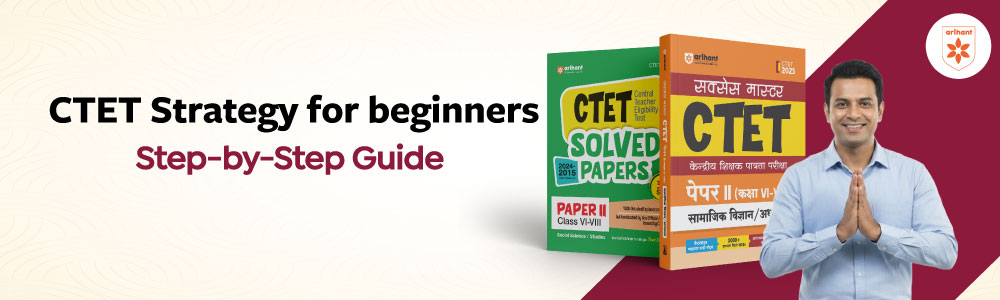
For effective CTET preparation, aspirants need a smart combination rather than a single book. The trio of Success Master, CTET Solved Papers, and CTET Practice Sets from Arihant Publications works perfectly together. Success Master builds strong concepts, Solved Papers help understand real exam trends, and Practice Sets provide exam-level practice for speed and accuracy. Together, this balanced combination covers learning, analysis, and practice, making CTET preparation more focused and result-oriented.
Final Preparation Tips Before The CTET Exam
With the CTET exam on 8 February, the final phase should focus on smart revision:
1. Revise important concepts daily
2. Practice at least 2–3 full-length mock tests
3. Focus on accuracy rather than speed
4. Avoid starting new books at the last moment
After completing full syllabus coverage and theory preparation, students need exam-oriented practice to assess their real readiness. At this stage, Arihant’s CTET Kit becomes extremely effective. It provides exact CTET pattern–based mock papers, OMR practice sheets, solved questions with clear explanations, and teacher handout notes for quick revision. The 15-day structured practice plan helps aspirants sharpen speed, accuracy, and confidence, making it an ideal final-step resource before the CTET exam.
Conclusion
Cracking CTET is not about studying endlessly, it is about studying smartly. By understanding the exam pattern, avoiding common beginner mistakes, and choosing the best book for CTET exam, aspirants can transform their preparation journey. The right CTET exam books act as a mentor, guiding you through concepts, practice, and revision. With focused effort and disciplined use of the best CTET exam preparation books, success becomes achievable even in the first attempt.
Stay motivated, trust your preparation, and remember, CTET is not just an exam, it is the first step toward a meaningful teaching career.
FAQs
Q1. What Should Beginners Study First While Starting CTET Preparation?
Ans. Start with Child Development and Pedagogy (CDP). It forms the foundation of all subjects and carries the most weight across both papers.
Q2. How Much Time Is Required For A Beginner To Prepare For CTET?
Ans. Ideally, 3 to 4 months of consistent study for 3–4 hours daily is sufficient to cover the syllabus and practice mocks.
Q3. Is It Necessary To Follow A Subject-Wise Strategy For CTET Beginners?
Ans. Yes. A subject-wise approach ensures you balance content knowledge with pedagogy, as both are equally vital for scoring high marks.
Q4. What Common Preparation Mistakes Should CTET Beginners Avoid?
Ans. Avoid rote learning, skipping previous year papers, and neglecting the Language papers, which are often high-scoring.