Are Mind Map Books Enough For Competitive Exams?

Introduction
The UPSC syllabus is so vast that no matter how much aspirants study, it often feels insufficient. Many students prepare from multiple sources, which leads to confusion, scattered learning, and revision problems. While standard books are necessary, revising such a huge syllabus repeatedly becomes difficult. To address this challenge, UPSC Mind Maps for IAS offer a smart and effective solution.
This blog consists of a clear explanation of whether mind map books are enough, how to use them with standard resources, who should use them, and how the right Mind Map Book for UPSC can simplify preparation and boost exam readiness.
|
Table of Contents |
|
1. Introduction |
2. Are mind map books enough for competitive exams? |
3. How to use mind maps for UPSC along with standard books? |
4. Who should use UPSC mind maps and who should not? |
5. Which is the best UPSC mind map book for IAS aspirants? |
|
6. Conclusion |
|
7. FAQs |
Are Mind Map Books Enough For Competitive Exams?
Mind map books are extremely helpful, but they are not a complete replacement for standard textbooks. UPSC mind maps work best as a revision, but not as the only source of study. Competitive exams like UPSC require deep conceptual understanding, current affairs integration, and answer-writing practice, which come from standard books and newspapers.
However, Mind Maps UPSC Books Are Highly Effective For:
1. Quick revision before Prelims and Mains
2. Remembering interlinked concepts
3. Retaining facts, data, and frameworks
4. Reducing revision time
How To Use Mind Maps For UPSC Along With Standard Books?
To get the best results from your Mind Map Book for UPSC, follow this simple strategy:
1. Read the Chapter: First, read a topic from your standard book.
2. Refer to the Map: Open your UPSC Mind Maps for IAS and see how that big chapter is broken down into small branches.
3. Active Recall: Look at a keyword on the mind map and try to remember the details. If you forget, check the textbook again.
4. Add Your Notes: If you find a new point in the news, scribble it onto your mind map. This makes your Mind Maps for UPSC Exam Preparation complete and updated.
Who Should Use UPSC Mind Maps And Who Should Not?
UPSC mind maps are especially useful for:
|
UPSC mind maps are especially useful for: |
UPSC mind map books may not be ideal for: |
|
· Beginners who want a clear overview of topics · Working professionals with limited study time · Aspirants facing revision and retention issues · Visual learners who understand better through diagrams · Mains-focused aspirants needing structured answers |
· Aspirants who rely only on memorisation without concept clarity · Those looking for detailed explanations and theory · Candidates who have not studied standard books at all |
Which Is The Best UPSC Mind Map Book For IAS Aspirants?
The Best UPSC Mind Map Book is one that covers the entire syllabus comprehensively, presents content in a clean and exam-oriented format, and aligns with UPSC trends. A good Book for Mind Maps for UPSC should include:
1. Presents the complete syllabus through clear, topic-wise mind maps for quick understanding
2. Helps concepts click at one glance, reducing dependence on bulky texts
3. Enables fast and effective revision anytime, anywhere
4. Uses brain-friendly visuals, flowcharts, and infographics to boost retention
5. Follows a scientific learning approach that strengthens memory
6. Acts as a smart visual tool to keep tough concepts fixed in the mind
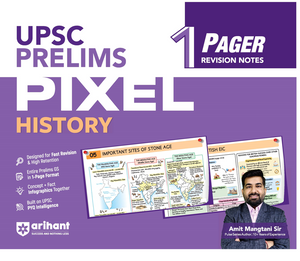
Now students no longer need to search multiple places for the best mind maps for different subjects, because Arihant’s GPS Book Series brings all subjects together in one place. From History and Polity to other core areas, everything is covered through clear, well-structured, and brain-friendly mind maps that make concepts easy to understand and revision quick. This all-in-one approach solves common student problems like scattered resources, confusion, and lack of revision time, making Arihant GPS a complete and reliable solution for competitive exam preparation.
Conclusion
Success in UPSC comes from smart preparation and strong revision. Mind Maps for UPSC help aspirants simplify the syllabus, retain concepts longer, and revise with confidence. The GPS Series, published by Arihant Publications, brings all subjects under one roof, saving time and removing confusion. With its clear visuals and exam-focused approach, this book motivates aspirants to stay consistent, confident, and fully prepared for the IAS journey.
FAQs
Q1. What Are The Limitations Of Using Only Mind Map Books For Exams?
Ans. Mind map books are excellent for revision and clarity, but they cannot replace standard textbooks needed for detailed concepts, examples, and answer-writing practice.
Q2. Do Mind Map Books Cover Sufficient Depth For Competitive Exams?
Ans. They provide structured and exam-oriented coverage, but full depth is achieved when they are used along with NCERTs, reference books, and current affairs.
Q3. How Should Mind Map Books Be Combined With Other Study Resources?
Ans. First study from standard books, then use mind map books for quick revision, concept linking, and structuring answers.
Q4. Are Mind Map Books Suitable For Beginners Or Advanced Learners?
Ans. They are useful for both, beginners gain clarity and direction, while advanced learners benefit from fast revision and better retention.