How To Revise NCERT For Both CUET And Boards
Introduction
Mastering the CUET UG 2026 exam and your Class 12 board exams at the same time might feel like a huge challenge. However, there is a "secret weapon" that connects both: the NCERT textbooks. Since the NTA bases the domain-specific syllabus directly on the Class 12 NCERT curriculum, your board preparation is actually 70% of your CUET preparation.
In this guide, we will show you how to use NCERT effectively, choose the best CUET preparation books, and avoid common mistakes to ensure you land a seat in your dream university.
|
Table of Contents |
|
1. Introduction |
2. Why is NCERT the backbone for the CUET exam and boards? |
3. Smart NCERT revision techniques for dual preparation |
4. How to use CUET preparation books alongside NCERT? |
5. Common mistakes students make while revising the NCERT for the CUET exam? |
|
6. Conclusion |
|
7. FAQs |
Why Is NCERT The Backbone For The CUET Exam And Boards?
Here is why NCERT is your most important tool:
1. Official Syllabus Alignment: The NTA explicitly follows the Class 12 NCERT syllabus for the domain-specific subjects in CUET.
2. Concept Clarity: Boards require you to write long answers, while the CUET Exam tests your deep understanding through MCQs. NCERT is designed to build that foundational logic.
3. Direct Questions: Often, the lines directly from NCERT chapters are turned into multiple-choice questions. If you know your textbook well, you can answer these in seconds.
4. Standardised Level: Since students from various state boards and CBSE take this exam, NCERT acts as the common ground for everyone.
Smart NCERT Revision Techniques For Dual Preparation
You don’t have time to study for Boards and CUET separately. You need a "dual-prep" strategy. Here is how to revise smartly:
1. Highlight the Facts: While reading for your boards, use a highlighter for dates, names, formulas, and key events. These "small details" are exactly what the CUET UG 2026 exam asks in MCQs.
2. Don’t Skip the "Boxes": Many students ignore the "Did You Know?" boxes and side tables in NCERT. Don't do that! The NTA often picks tricky questions from these hidden corners.
3. Use the Chapter Summary: At the end of every NCERT chapter, there is a "Points to Ponder" or "Summary" section. Read every night. It’s the fastest way to keep the main ideas fresh for both your boards and your CUET book 2026 practice.
4. Solve as You Go: As soon as you finish an NCERT chapter for school, solve 20 MCQs from your CUET preparation books. This turns your theory into "exam-ready" knowledge instantly.
How To Use CUET Preparation Books Alongside NCERT?
While NCERT gives you the knowledge, CUET preparation books give you the practice. You cannot win a race just by reading about running; you have to practice on the track.
|
Mastering the MCQ Format |
NCERT doesn't have enough multiple-choice questions. You need to buy the best CUET books that offer at least 100–200 MCQs per chapter. |
|
Solving Mock Tests |
Use a dedicated CUET book 2026 to solve full-length mock tests. This helps you manage your time, as you only have 45–60 minutes per subject in the actual exam. |
|
Section III (General Test) |
This is where NCERT won't help. You must find the best book for CUET preparation 2026 that covers Quantitative Aptitude, Logical Reasoning, and Current Affairs. |
|
Bridging the Gap |
Use reference books to understand topics that feel too brief in the NCERT. However, always come back to NCERT to "finalise" your notes |
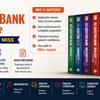
Arihant’s CUET UG Chapter-wise Notes & Question Bank is one of the best reference books for CUET preparation. After completing NCERT, this book is very helpful for practice and revision. It offers chapter-wise notes, NCERT-based MCQs, and exam-oriented questions as per the latest CUET pattern. For CUET UG 2026 aspirants, it effectively connects NCERT concepts with actual exam-level questions and helps improve accuracy and confidence.
Common Mistakes Students Make While Revising The NCERT For The CUET Exam?
Avoid these four common traps to stay ahead of the competition:
1. Ignoring Class 11 Basics: While the CUET UG 2026 Exam focuses on Class 12, some concepts in Physics or Economics might need a quick look back at Class 11 basics. Don't be afraid to revisit old notes.
2. Rote Learning: Memorising answers might get you marks in Boards, but it won't work in CUET. The CUET Exam uses "Assertion-Reasoning" and "Statement-based" questions that require deep logic.
3. Over-Buying Resources: Don't hoard ten different books. It’s better to finish one CUET PG Exam Book or UG guide three times than to read three books once. Stick to the best books for CUET 2026.
4. Neglecting Negative Marking: In Board exams, there is no penalty for wrong answers. In CUET, there is! Students often guess answers blindly. Practice with a CUET book 2026 that has a marking system to get used to being careful.
Conclusion
NCERT remains the foundation for CUET preparation, but smart aspirants strengthen their preparation with the right reference book. When NCERT revision is combined with a focused book like Arihant’s CUET UG Chapter-wise Notes & Question Bank, preparation becomes structured, exam-oriented, and confident. With regular revision, the right strategy, and the right book, cracking the CUET UG 2026 Exam is not just possible; it becomes achievable with clarity and confidence.
FAQs
Q1. Which NCERT Chapters Are Most Important For CUET And Boards?
Ans. All NCERT chapters from the latest syllabus are important, but high-weightage and frequently asked topics should be revised first.
Q2. How Should Students Revise NCERT Concepts For Objective-Based Exams?
Ans. Focus on key definitions, formulas, examples, diagrams, and in-text questions, and practice MCQs directly from NCERT lines.
Q3. Is Line-By-Line NCERT Reading Necessary For CUET Preparation?
Ans. Yes, because many CUET questions are directly framed from NCERT lines, especially facts and concepts.
Q4. How Can NCERT Revision Be Planned During The Final Months?
Ans. Use a daily revision schedule, revise one subject at a time, and combine NCERT reading with mock tests and quick notes.